Moon Society

Moon Society · Indore

Meet us under the moon.

The rest is an experience.

A space for movement, stillness, expression, connection and healing.

From Ecstatic Dance to intimate circles, sound journeys, cacao ceremonies, conscious gatherings and experiences we haven't imagined yet. Moon Society creates spaces where you can simply be.

What is Moon Society?

You don't always need to fix yourself. Sometimes you just need a space where you can feel yourself.

Moon Society is a growing community built around one simple idea.

We create intentional experiences that help people step outside their everyday routines and reconnect with their body, emotions, creativity, inner world and community.

  • Some experiences are energetic.
  • Some are quiet.
  • Some involve movement.
  • Some involve stillness.
  • Some are deeply introspective.
  • Some are simply about being around good people without having to perform.

There is no single way to experience Moon Society.

The Moon Society experience

From arriving as a stranger to leaving a little more connected.

A Moon Society gathering is intentionally designed as a journey through different states of experience.

The sequence matters. You're not simply attending a list of separate activities. Each one prepares something for the next.

  • It begins socially.
  • Then it becomes inward.
  • Then physical.
  • Then quiet again.
  • And finally, communal.
01Arrive

Arrival

First, we arrive.

Not just physically.

Most of us arrive somewhere while our minds are still somewhere else.

  • A conversation we had in the afternoon.
  • A message we haven't replied to.
  • Tomorrow's work.
  • Something we're worried about.

So the beginning of Moon Society isn't designed to immediately make you “heal”. It's designed to give you time to land.

You meet people. You talk. You laugh. You don't necessarily know anyone. And that's okay.

There's no expectation that you have to introduce your deepest self to a room full of strangers. You can simply be there.

The first practice is presence.

Why it feels goodMost people expect small talk with strangers to feel awkward. Afterwards, they usually feel happier than they predicted. Friendly faces also tell your body it's safe to relax.

02Play

Face painting

Strangers, for a moment, holding each other's faces.

This might look like the most playful part of the evening. And it is. But there's something interesting happening underneath it.

People who arrived as strangers are suddenly asked to trust another person enough to let them paint their face. You look closely at someone. They look closely at you. You create something together.

There is no performance standard. No artistic judgement. Someone might draw a beautiful pattern. Someone else might put a completely random line across your forehead. And slowly, the social distance disappears.

It's a small act of play. And play is one of the easiest ways humans stop performing.

This is why we don't treat face painting as decoration. It's an opening.

Why it feels goodPlay and laughter loosen the body. When you laugh and meet someone's eyes, you tend to feel safer around them, which is why strangers start to feel like friends so quickly.

03Ground

Meditation

The room gets quieter.

After the social energy, we turn inward.

Meditation at Moon Society isn't about forcing your mind to become empty. That's a misconception that makes meditation intimidating.

Instead, you are invited to notice:

  • your breath.
  • your body.
  • your thoughts.
  • the sounds around you.
  • the fact that you're here.

Thoughts can come. They can go. You don't need to fight them. You simply notice.

This is where the evening moves from social connection to inner awareness.

Why it feels goodWhen you slow down and just notice your breath, your body steps out of rush mode. Your breathing settles, your shoulders drop, and many people feel calmer and clearer afterwards.

04Ground

Om chanting

One sound. Many voices.

Om, or Aum, has a long history in Indian contemplative traditions and is used in yogic and meditative practices. At Moon Society, you don't need to believe anything about it. You can simply experience the sound.

You breathe. You vocalise. You hear the sound of everyone around you.

And something interesting happens when many individual voices become one continuous sound: you stop hearing yourself as a separate voice for a moment.

A vibration you don't just hear. You feel.

Why it feels goodA long, slow hum makes you breathe out slowly, and slow breathing tells your body to calm down. You can also feel the vibration in your chest and throat. Many people feel steadier afterwards.

05Notice

Awareness activities

Awareness through play.

Before we sit with cacao, we wake the body and the attention up. Everyone plays.

Guided by the facilitator, simple movements become something you actually notice. These are the kinds of things we do:

  • Running, with guidance.
  • Walking in slow motion.
  • Building bridges together.
  • Walking backwards.
  • Other awareness activities, which change from gathering to gathering.

Slow walking and walking backwards sound simple. Do them with attention and you start to notice your feet, your balance, and how much of your day you move on autopilot. Nobody is watching how you do it, and nobody wins.

Awareness doesn't only arrive through stillness. Sometimes it arrives through play.

Why it feels goodRunning gets your heart pumping, and slowing down lets you feel it settle. Walking backwards or building bridges is new for your body, so you can't zone out and your attention comes into the present. Doing something physical together also makes people feel safer around each other.

Activities differ from one gathering to the next. You can always sit one out and watch.

06Open

Cacao ceremony

Cacao is not the magic. The intention is.

From here until the end of sound healing, we keep a gentle silence. No talking, no phones, no staring. A smile is always welcome. Read our agreements

Cacao has been used in Mesoamerica for thousands of years, in ceremonies, offerings, important life events and everyday social life. We didn't invent the cacao ceremony, and we hold that history with respect.

Our three-part structure, Gratitude → Manifestation → Reciprocity, is our own contemporary framework. It is not an ancient ritual.

You receive the cacao slowly. Instead of treating it like another drink, we create a pause around it. You notice its taste. Its warmth. The act of receiving something. Then we use the moment to ask three questions.

Gratitude

What is already here that I usually move too quickly to notice?

Not forced positivity. Not “everything is amazing.” A person. A place. Your body. A second chance. A friendship. The fact that you're alive and sitting here.

Gratitude shifts attention from what is missing toward what is already present.

Manifestation

What are you willing to do differently to move towards it?

This isn't about the universe being a vending machine. It's about clarity of intention. What do you actually want? What are you moving toward? Who do you want to become?

The intention becomes something you can carry beyond the evening.

Reciprocity

What will you give back?

To yourself. To someone you love. To your community. To nature. To the people who make your life possible. Receiving without giving creates consumption.

I receive. I give. I participate. Not just consume.

Cacao gives us a reason to slow down, gather and become intentional.

Why it feels goodDark chocolate and cacao carry natural compounds like flavanols and theobromine. They can gently improve blood flow and give a softer lift to your mood and energy than coffee does. Add the pause, the warmth and the gratitude, and it becomes a good moment to feel grounded. It's a ritual, not a medicine.

Please tell us about allergies, medication or pregnancy before you join a cacao ceremony.

07Move

Ecstatic Dance

The body takes over the conversation.

This is where the experience changes completely. Until now, you've mostly been observing. Now you participate physically.

Ecstatic Dance is unstructured, non-evaluative, mindful movement in a group, without choreography or performance.

There is nothing to learn.

No steps. No mirror. No audience. No correct movement.

You listen to the music. Then you notice your body. Maybe your shoulders move first. Maybe your feet. Maybe your whole body. Maybe you barely move. That's allowed too.

Why call it a moving meditation?

Traditional meditation often asks you to stay still and observe. Ecstatic Dance gives you another possibility: what if movement itself became the object of awareness?

You feel your feet touch the floor. Your breathing changes. Your body gets warmer. You notice tension. You notice rhythm. You stop planning the next movement. And sometimes you enter what psychology calls flow, a state of absorbed attention where self-consciousness can temporarily recede.

For a little while, you stop dancing for the outside world. You start listening to the inside.

Why it feels goodDancing gets your heart pumping and your body warm, and your body releases feel-good chemicals called endorphins. Moving to music with other people adds to it: more energy, more connection, and often more ease in your own body.

Conscious dance draws on several movement traditions, including Gabrielle Roth's 5Rhythms. Everyone experiences it differently, and we don't promise any particular effect.

08Receive

Sound healing

When nothing needs to be said.

After movement comes stillness. Your body has moved. Your attention has shifted. Your energy has changed. Now you lie down. And listen.

So what actually is it?

At Moon Society, sound healing is an immersive sound and relaxation experience using instruments such as singing bowls, gongs, chimes and other resonant instruments.

There is no choreography. No technique to master. You don't have to meditate. You don't have to concentrate. You don't even have to stay awake. You simply receive the sound.

A bowl is struck. You hear the initial tone. Then the sound continues after the strike. It changes. It fades. Another sound appears. Then another. Instead of following a melody like a normal song, you start noticing texture, resonance, silence and vibration.

hear → notice → breathe → listen

Part of the experience is simply the setting: lying down, usually with your eyes closed, away from screens and ordinary conversation. Sound and vibration become the main thing you're attending to.

You don't have to make yourself relax. You just have to lie down and listen.

Why it feels goodLying still while slow sounds wash over you lets your body switch from alert to rest. Your breathing slows, your muscles soften, and many people feel deeply relaxed, a bit like after a good nap.

Sound experiences are not a medical treatment, and we don't promise any particular outcome.

09Share

Sharing circle

From inner experience back to human connection.

This is where the evening becomes relational again. Everyone sits together. Not in rows. In a circle.

A circle subtly changes the social architecture of a room: there is no front. No stage. No “important person” sitting at the centre. Everyone can see everyone.

The difference isn't just talking. It's listening.

Normally when someone talks to us, part of our mind is already preparing: “What should I say next?” A structured circle changes that. Someone speaks. Everyone else listens. No interruption. No fixing. No immediate advice.

You don't have to agree with someone to listen to them. You don't have to solve their problem. You can simply witness another human being.

Speak if you want. Pass if you don't. Listen either way.

Why it feels goodSaying a feeling out loud takes some of its weight off. And being listened to, without being interrupted or fixed, makes you feel understood. That's why many people leave a circle feeling lighter.

Circle practice draws on many Indigenous and community traditions. We don't claim to have invented it, and we hold it with respect.

10Nourish

Sattvic food

After everything, we eat.

There's something beautiful about ending an introspective experience with something extremely physical: food.

Sattvic food comes from the Indian yogic framework of the three gunas: sattva, rajas and tamas. Sattva is associated with clarity, harmony and balance, and sattvic food is traditionally described as fresh, nourishing and agreeable.

Moon Society's interpretation is simple.

Fresh food. Simple food. Conscious food. Shared food.

After movement, sound, reflection and conversation, sitting around a meal does something very human. The experience stops being abstract. You eat. You talk. You laugh. Someone asks where you're from. Someone tells you about their night. The stranger you met earlier might now feel familiar.

And that's the return.

Why it feels goodA warm meal after movement and rest helps your body refuel, and eating together is one of the oldest ways humans bond. People who share meals often tend to feel happier and more connected.

Return

The whole journey

You came with the outside world on your shoulders.

You leave carrying a little more of yourself.

One more thing

We call them experiences.

Not healing modalities. Moon Society isn't saying “we know what's wrong with you, and we know how to fix it.”

It's saying: here's a space. Here's an experience. See what it opens in you.

Not every night follows this exact path. Some gatherings skip a step, add another or take a different shape, from women's circles to breathwork, journaling and full moon gatherings. We keep experimenting.

Who is this for?

If you're curious.

You don't need to consider yourself "spiritual".

You don't need experience with meditation, dance or healing practices.

You just need curiosity.

Moon Society is for people who

  • feel overstimulated by everyday life
  • want to reconnect with themselves
  • are curious about movement and conscious experiences
  • want meaningful social connection
  • enjoy spirituality without rigid beliefs
  • want to explore emotional expression
  • are curious about healing practices
  • simply want to try something different

What Moon Society is not

Nota club. Nota party. Nottherapy. Nota religion. Nota performance. Not a place to pretend you have it all figured out.

It's simply a space to experience something different.

Moon Society is a community and experiential space. It isn't a substitute for professional mental-health care, and nothing here is medical advice.

Our culture

Come as you are.

No judgement

People should feel free to participate at their own pace.

No performance

Nobody is here to impress anyone.

Consent & boundaries

Everyone's physical and emotional boundaries matter.

No smoke, substances or alcohol

Please arrive clear. Smoke, substances and alcohol stay outside, so everyone can feel what they actually feel and the space stays gentle and safe.

Respect

Different beliefs, identities, backgrounds and ways of experiencing the world are welcome.

Participation is optional

You can always pause, observe or step out when appropriate.

Upcoming experiences

Find us next.

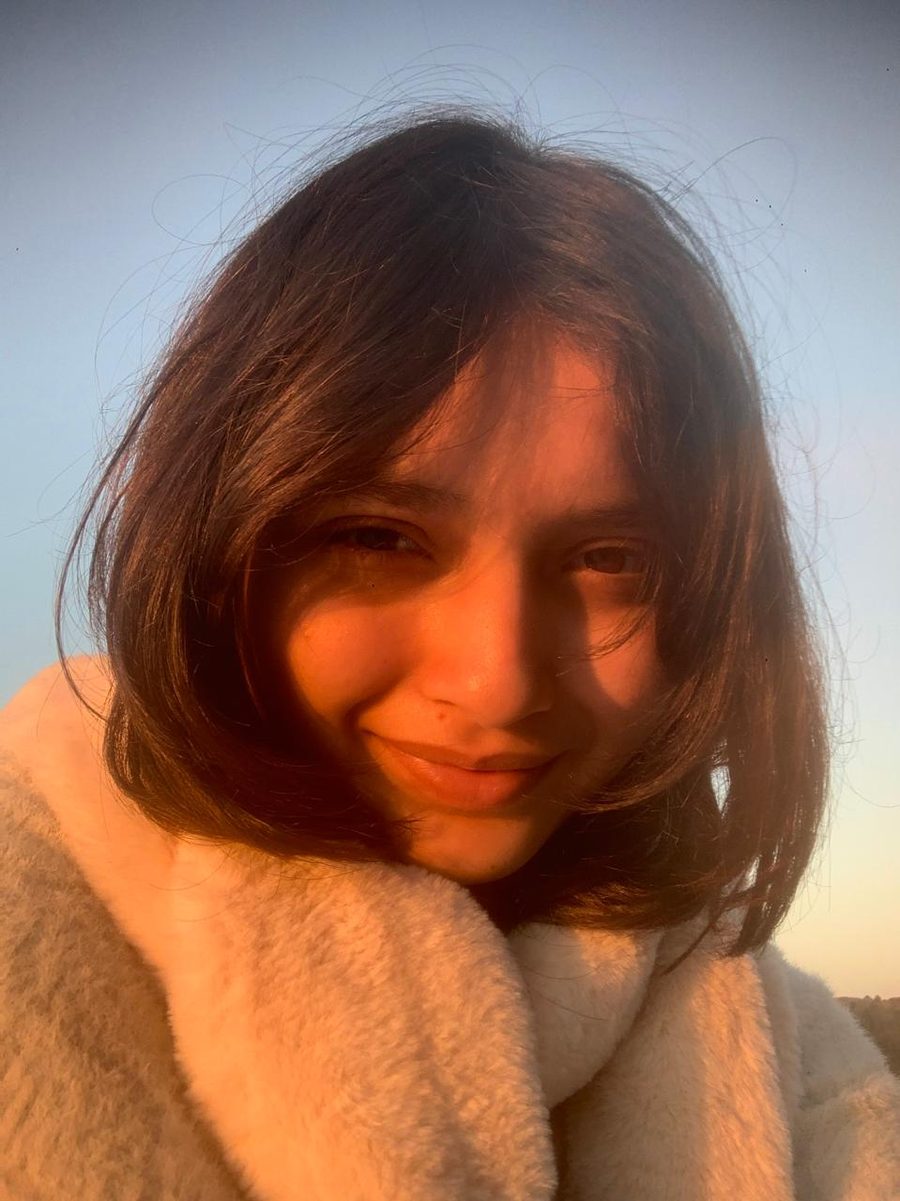
Moksha Sisodiya, founder of Moon Society, smiling in golden evening light
Moksha SisodiyaFounder, Moon Society

Behind the moon

Moksha Sisodiya

Founder, Moon Society

Moon Society began with a question: what happens when people are given a space where they don't have to perform?

We spend so much of our lives being something for someone.

A student. A friend. A professional. A daughter. A partner. A version of ourselves that looks like it has everything figured out.

But underneath all of that, there is simply a human being trying to experience life. I wanted to create a space where that person could exist for a while.

Not a club. Not a party. Not another place where people come together just to talk about how busy their lives are. And not a place that tells people they need to be “fixed”.

Just a space to move, feel, listen, express, connect and be. That became Moon Society.

Why the moon?

Because the moon is never just one thing. It changes. It disappears. It returns. Sometimes it is full. Sometimes barely visible. And somehow, every phase still belongs to the same moon.

I think people are like that too. There are versions of us that are loud, certain and full of energy. And there are versions that need silence, distance and darkness.

Moon Society was created for all of them.

Still becoming

I'm not building Moon Society from a place of having everything figured out. I'm building it from curiosity.

Curiosity about people. About consciousness. About connection.

About what happens when strangers are given permission to be a little more honest, playful, present and human.

Every gathering teaches me something. Every person who walks through the door changes the community a little. So Moon Society isn't a finished idea. It's something we're discovering together. And maybe that's the most honest thing about it.

A note from Moksha

If you've ever felt like you needed to become a different version of yourself before you could belong somewhere, you don't. Come exactly as you are. We'll meet you there.

— Moksha

Write to Moksha: mokshasinghsisodiya@gmail.com
Write to Moon Society: joinmoonsociety@gmail.com

Community

We're building a community.

Moon Society is not just an event organizer.

The goal is to create recurring spaces where people can return, recognize familiar faces, meet new people and gradually become part of something.

The Moon Society philosophy

Move when you want to move. Be still when you want to be still. Speak when you want to speak. Listen when you want to listen. Come as you are.

There is no perfect version of you that you need to become before you belong here.

Before you come

Come curious. We'll hold the rest.

If anything here feels unclear, or a little scary, that's completely okay. Read through, and ask us whatever you like. We'd love to have you.

A few gentle agreements

From the cacao ceremony to the end of sound healing

Quiet

We keep this part of the evening in silence. No talking. It gives everyone room to feel what is happening inside, without having to answer or explain anything to anyone.

Soft eyes

No staring. If you meet someone's eyes, smile and appreciate them, then let the moment pass. You can acknowledge each other without holding the gaze.

Phones away

Phones stay put away so that everyone can be fully here. You won't miss a thing, and nobody is waiting for a reply.

Photos and videos, taken care of

Our team's videographer captures the gathering so that you don't have to. If you'd rather not be on camera, just tell us. That's completely fine, and we'll take care of it.

No smoke. No substances. No alcohol.Please arrive clear, so that everyone can feel what is really there.

Do I need to know how to dance?

Not at all. Ecstatic Dance has no choreography, no steps and nobody watching. Most people who come have never danced in front of others. You can sway, shake, stand still with your eyes closed, or sit at the edge and watch for a while. There is no wrong way, and you are welcome exactly as you are.

Is Moon Society only Ecstatic Dance?

No, and that's what makes it special. Ecstatic Dance is one chapter of the evening. We also play awareness games, sit in cacao ceremonies, chant, rest in sound healing, share in circles and eat together. Gatherings keep changing, and we're always growing new formats with the community.

Do I need previous experience?

None at all. You don't need to have meditated, danced or tried any healing practice. If you're curious, you're ready. A facilitator guides every step, and you can ask us anything on the night.

Can I come alone?

Yes, and many people do. Coming alone is often how friendships start here. The evening begins with gentle, social moments, so you'll meet people before anything deeper begins, and everyone around you is also arriving as a stranger.

Can I join without dancing?

Yes. Depending on the event, you can move as little as you like, sit, lie down, or watch for a while and join when you feel ready. Participation is always optional. We only ask that you respect the structure of the experience and everyone's personal space.

Can I talk, use my phone or take photos?

The early part of the evening is social, so talk, laugh and meet people. From the cacao ceremony until the end of sound healing, we keep a gentle silence: no talking, no phones, no staring. Smile, appreciate each other, and let the evening happen. Photos and videos are taken by our team's videographer, so you can stay fully present. If you'd rather not be filmed, just tell us.

Can I come after a drink or a smoke?

Please arrive clear. There is no alcohol, smoke or any other substance at Moon Society, before or during the evening. We keep it this way so that everyone can feel what they really feel, and so the space stays safe and gentle for each person. If you've had a drink or smoked, please sit this one out and join us at the next one. You'll be so welcome.

What if I feel overwhelmed?

You can pause, sit down or step out at any time, and nobody will ask why. If you'd like a moment or some company, tell anyone on the team. Looking after you matters more than finishing the activity.

Is this therapy?

No, and we want to be clear about that. Moon Society is a community and a set of experiences. It isn't therapy or medical treatment, and it can't replace professional mental-health care. If you're going through something heavy, please lean on a professional too. You're still very welcome here for community and presence.

What should I wear?

Whatever lets you move and feel comfortable: loose, soft clothes you don't mind sweating in. Bring a light layer for sound healing, when your body cools down. There's no dress code, and nobody needs to look a certain way.

Where are events held?

Locations change with the experience, and we choose spaces that feel calm and safe. Exact details, and how to book, are shared on our Instagram page and in the WhatsApp community.